
About the LUV Lab
The Language Use and Variation (LUV) Lab investigates how individuals interact with language variation, how community-wide patterns of language use emerge from conversational interactions, and how patterns in language use can lead to language change over time. We employ both laboratory and community-based research methods, and we take an interdisciplinary approach grounded in cognitive science, sociology, psychology, acoustics, and linguistics. Ongoing research projects include the analysis of minority speech patterns in Philadelphia English and the role that cognitive processing strategies play in an individual’s tendency to adapt to variation in their input.
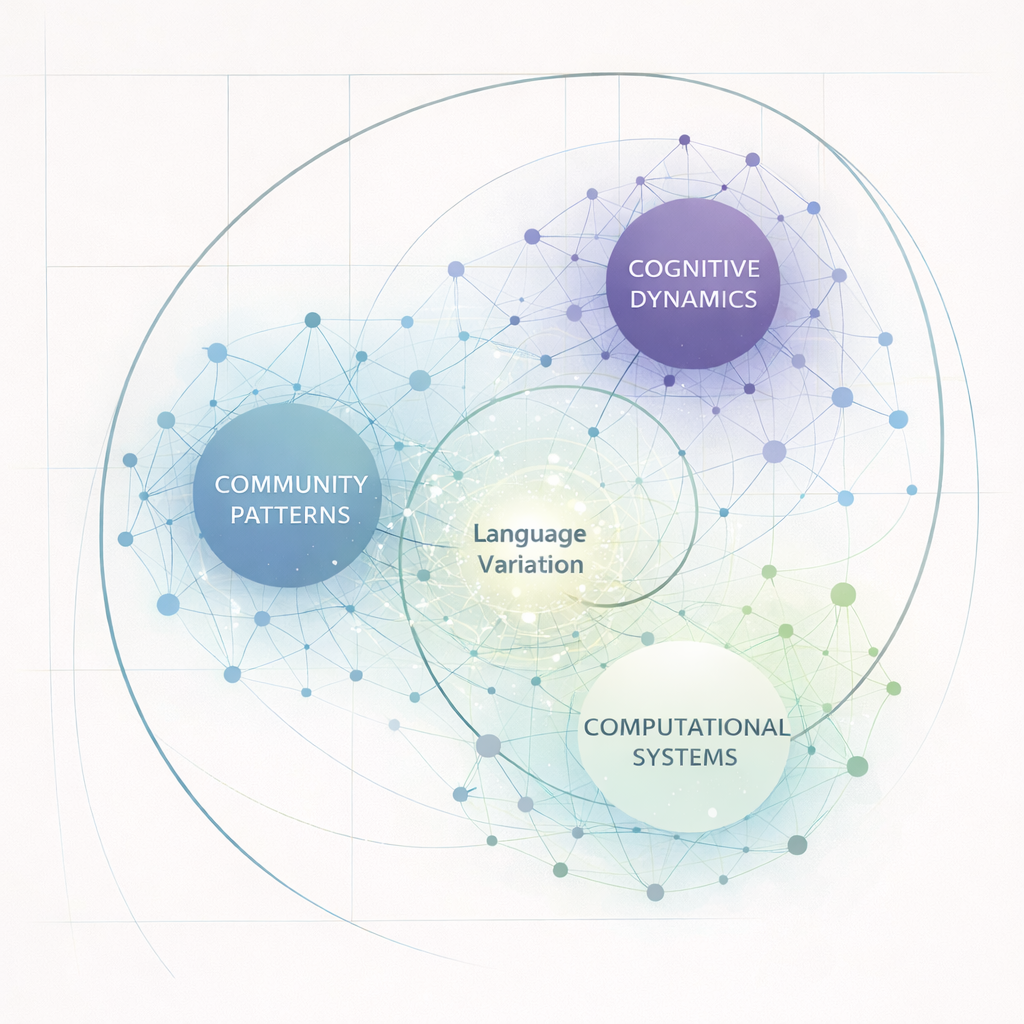
The lab is organized into three research clusters:
Community
The Community research cluster focuses on how patterns of language variation are given value by groups of individuals and how those patterns and values change over time due to internal and external factors. Researchers develop skills in sociolinguistic interviewing, speech transcription, linguistic-variable extraction, and statistical analysis.
Cognition
The Cognition research cluster uses behavioral and neurophysiological techniques to investigate how cognitive processing strategies influence the way humans interact with variation in language. We are interested in how human beings integrate variation they hear into their own speech (phonological adaptation) and how linguistic features with high social value are processed mentally.
Computation
The Computation research cluster uses machine learning and computer simulations to study how idiosyncratic patterns of language variation develop structure over time and how exposure leads to the acquisition of variable patterns. We also develop machine-learning tools that support research across the lab.
Team


Fatima Aliman
LUV Lab Member
Cooper Ballard
Visiting ResearcherFall 2026, Dartmouth College


Theodora Greiss
LUV Lab MemberGrace Maguire
LUV Lab Member
Samika Sequeira
LUV Lab MemberIsabela de Melo Silva
LUV Lab MemberAidan Williamson
LUV Lab MemberNumbers at a Glance
Onward and Upward!
Active Members
Conference Presentations
Publications and Preprints
Students Involved to Date
Ongoing Research
Current and emerging projects across the lab's three research clusters.
Community
We examine variation and change in Philadelphia Puerto Rican English while developing rigorous skills in community-based data collection and analysis.
Ongoing and Incipient Research
- Variation and change in the Puerto Rican English in Philadelphia (PREP) Corpus, including EY-raising, sex-differentiated OH-lowering, and relationships between vowel production and speaker identity.
- Extending the PREP corpus through alignment and vowel extraction across the fuller dataset, while expanding public-facing transcript availability.
Cognition
We investigate how cognitive processing strategies influence adaptation to linguistic variation using behavioral and neurophysiological methods.
Ongoing and Incipient Research
- Testing how speech-sound categories update under matched split and merger patterns using behavioral and EEG measures.
- Investigating when perceptual retuning transfers into a talker's own speech as phonetic drift.
- Testing whether earlier exposure continues to shape perception and production after current input becomes identical.
- Processing sociolinguistic variation.
- Acoustic-change detection: an EEG study of how the brain registers changes in speech.
Computation
We use machine learning and simulation to study how variable language patterns develop and to build tools that support research across the lab.
Ongoing and Incipient Research
- Phontrast, a toolkit for comparing measures of sound-category distinctness, with two related papers in submission and review.
- Simulating phonetic drift: can computers learn to speak with a foreign accent?
- LingViz, a lab-built tool in early development, beginning with its Perception module.
- Vowelchemy, a lab-built project in early development.
- Improving an AI tutor through a VITAL minigrant project, now wrapping up.
- Modeling and evaluating how talkers and artificial agents adapt to conversation partners.
Get Involved!
Interested in participating in a study? Click the button to sign up!
Note that participation is subject to the studies available and verification of your eligibility to participate.
How to Find Us
The LUV Lab is located in 221 Iadarola Center on the Villanova University Cabrini Campus.
221 Iadarola Center
Villanova University Cabrini Campus
610 King of Prussia Rd
Radnor, Pennsylvania 19087